Cinematography, Part 2: The Matrix

keanu-reeves-cell-phone-matrix.jpg

For this week’s forum, please watch the scene below and provide an analysis of the cinematography.  Remember what we discussed in class: being able to describe what you see is only part of the job.  Your analysis will only come to life once you find a way to think through how the aspects of cinematography you notice are used to make meaning in the scene.  Take the time to explore why these various choices are made, and if you think they are effective.  This will likely mean watching the scene more than once.

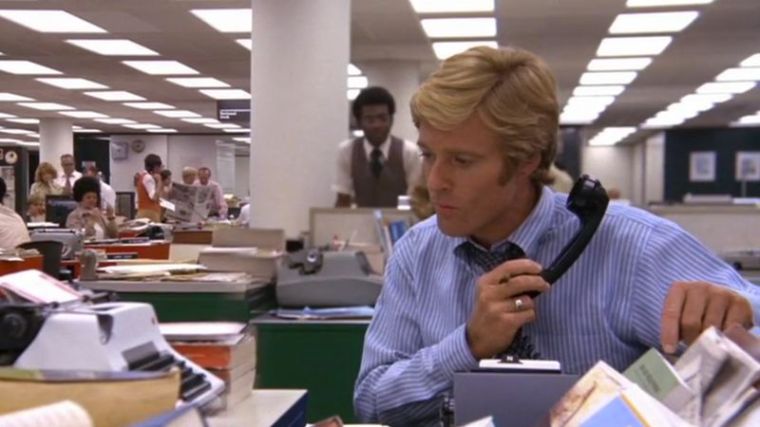
Cinematography in All the President’s Men

cq1rkkgadsxeglxq5nmk.jpg

All the President’s Men features many scenes in which its main characters simply sit and talk on the phone.  It must have been a challenge for the film’s director and cinematographer: how to convey deeper meanings and keep the audience engaged when they only have access to one side of a conversation, and when there is, by necessity (back in the day when phones needed to be attached to cords), very little on-screen movement?

Your task for Wednesday is to write an analysis of the cinematography in such a scene: the scene in which Woodward has two phone conversations with Dahlberg.  Please watch this scene (attached below), and then compose a thoughtful and detailed analysis about what you see (and hear!).

Dr. Strangelove

12Adam-Obit-WEB-master768.jpg

As Dr. Strangelove moves to its conclusion, the effort to stop all the bombers has ultimately failed.  The bomb is dropped, and the world will be annihilated.  We then return to the War Room, where we witness a calm and well-reasoned conversation about what comes next.

We can’t escape the ironies here: the world is ending, but the Russian is still sneaking off to take spy photos, the crazed American officer still imagines that competition with the Soviets will matter after 100 years underground, and Dr. Strangelove plots a course for the future in which the men in the War Room still come out on top, having a good time.  The film then cuts to a montage of mushroom clouds, as Vera Lynn croons “We’ll Meet Again” on the soundtrack.

Thinking in detail, provide an analysis of this final war room scene and the mushroom cloud montage that follows.  How do you understand this ending?  How does the soundtrack function to help create meaning?  What can we say about the composition of the frame (as described by Barsam) and how this works to create meaning in the scenes?  And in your judgment, is the humor here effective?  why or why not?

Dr_strangelove_peter_sellers.jpg

tumblr_o7142qSFs81rtpbuxo1_500.gif

Scene Comparison!

mrsmith1.jpg

kane_2-20130408-192159-large.jpg

A_Face_In_The_Crowd_Raw_Lrg.jpgMr. Smith Goes to Washington, Citizen Kane, and A Face in the Crowd each tells a tale about the complicated rise of a powerful man.  Go back and watch again the scene in each film in which its lead character is introduced.  Paying careful attention to details, and viewing with an eye toward how we might compare these scenes and their lead characters, describe something significant that you notice in the formal presentation of each of the scenes.  How does each film introduces its lead character, and how does this initial presentation inform us of something crucial about each of these characters?

Setting and Backstory in A Face in the Crowd

afaceinthecrowd1.jpg


We’ve now spent some time talking in more-general ways about how genre conventions help us to understand and categorize many films.  We’ve also discussed how these genre conventions often make these films predictable for viewers, and how they sometimes create expectations for viewers that the film then challenges.

This week we will look more-specifically at one example of a genre film.  After reading Chapter Four of Looking at Movies, discuss in as much detail as needed how the specifics of setting and backstory of A Face in the Crowd help it to tell its story.

How do setting and backstory come to inform how we are meant to understand Lonesome Rhodes and Marcia, and how does our understanding of these evolve as the film develops?   How do the specifics of what we see on the screen (and in the case of backstory, what we don’t always see on the screen) help influence our understanding of A Face in the Crowd‘s main characters and the film’s narrative?  What is your sense of what the filmmakers want us to experience and understand from the film?   As you compose your response, make sure to include specific details that illustrate your points.

A_Face_in_the_Crowd_1957.jpgface7.jpg

Reading a Scene: Citizen Kane

For our first forum, please provide an analysis of the opening sequence of Citizen Kane.  Now that you’ve watched the whole film, return to the opening, and explore what you find there.  This is an opportunity to pay close attention to—and then to think about—the details.

Some things you might think about as you consider what to write:  Why is this our introduction to Charlie Kane?  What do we learn about him from this opening?  What mood does the opening create?  How does it achieve this mood?  What choices does the director make?  What details do you notice?  And how are these details presented?  What seems important here?  And what seems less-important?  What do you notice about how this is filmed?  Are there themes that emerge in this opening sequence which are then developed in the film?

Come to class ready to discuss!